
Sleeping near Juliet’s House: Discover Verona from the Colomba d’Oro
Verona‘s connection to the most famous love story of all time has made it a popular destination for weddings and proposals, and in general one of the most popular tourist destinations in northern Italy. The choiche by William Shakespeare to set here “Romeo and Juliet” is not surprising at all as you walk through its cobbled streets, majestic squares, awe-inspiring monuments and cozy restaurants, that provide the ideal setting for a couple’s getaway or honeymoon.
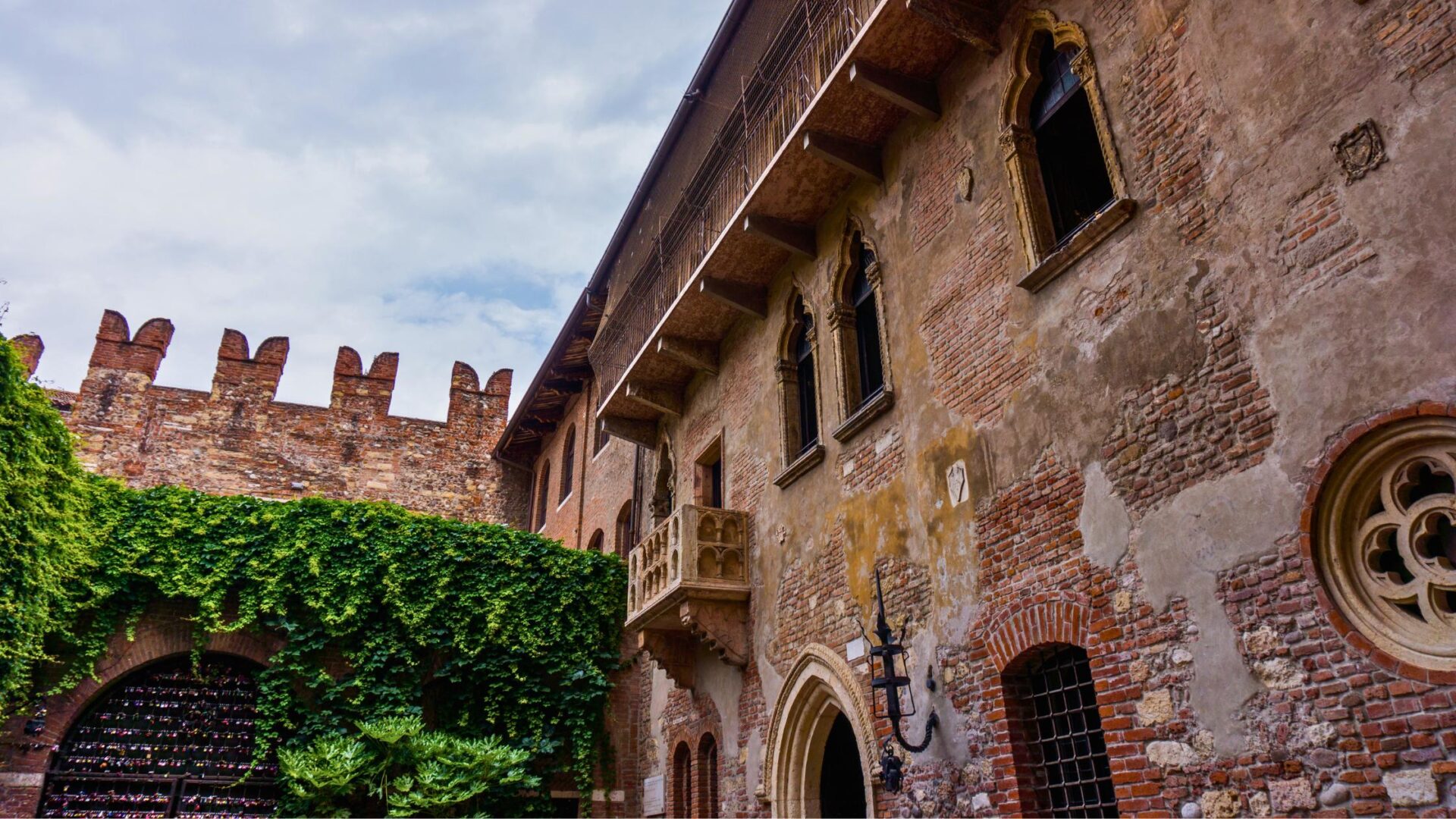
On Via Cappello, just a few minutes’ walk from the Colomba d’Oro, lies the most famous balcony in the world: Juliet’s.
Every year, thousands of tourists flock to the city of the Colomba d’Oro to experience firsthand the locations of Shakespeare’s drama and discover whether it’s merely a literary invention or whether it also conceals a foundation in reality. The truth is a mix of historical fact and scenic fantasy: the Capulet house – or rather Juliet’s House, today the city’s second attraction after the Verona Arena – is indeed an authentic 14th-century palazzo, but the iconic balcony was only added in the 20th century, a visionary intervention designed to bring the legend to life.
The legend near the Hotel Colomba d’Oro continues to thrill
When you cross the threshold of number 23 of Via Cappello, something peculiar happens: although the statue of Juliet that you will find in the famous courtyard although the statue of Juliet that you will find in the famous courtyard (the one that everyone takes pictures with, as also seen in the Netflix movie Love in the Villa) is a copy made in 2014 (whilr the original rests safely indoors, in the museum) and the bronze breast, worn by the superstitious ritual of millions of hands, is a modern tribute, the evocative power remains intact.
Juliet’s House, as it can be seen and visited today, is actually a masterpiece of architectural “staging” directed by museologist Antonio Avena in 1939. Before then, the building was far from its Shakespearean idyll; it was Avena who recovered original 14th-century pieces such as fireplaces, balustrades, and windows from various ancient buildings in the city to create the perfect setting.
Juliet’s Balcony is also a recent assemblage of ancient elements: its central slab is a 14th-century relic from the Scaligeri family’s residence, expertly integrated to provide a stage for that “eternal promise” we all dreamed of reading Shakespeare.
Is it all fiction, then? Perhaps. But it’s necessary: in fact, the real house of the Capulets (the Cappellettis, merchants from Cremona) once stood on the banks of the Adige, yet the soul of the legend found its final resting place here. Between the walls that tourists continue to fill with messages, photos, and stickers, and that statue observing the throngs of selfies, one can sense the human desire to always believe in love.
Where did the myth of Romeo and Juliet originate?
Many believe that the story of the two lovers is a William Shakespeare invention, but the roots of this myth lie deep in the heart of the Italian Renaissance and, even before that, in the verses of the Divine Comedy. It was Dante, in Purgatory, who first mentioned the feud between the “Montecchi and Cappelletti,” two families truly divided by the factional struggles of the 13th century. However, we owe the birth of the story as we know it to a nobleman from Vicenza, Luigi da Porto, who chose Verona as the setting a his tragedy he wrote in 1531.
Through various rewritings, the story crossed the Alps and arrived in England, where the Bard immortalized it in 1596. But in Verona, the myth became physical even before it became global: as early as 1560, an ancient sarcophagus in the church of San Francesco al Corso began to be identified as Juliet’s tomb. It was precisely that empty marble that triggered a short circuit between literature and reality: travelers on the 18th-century Grand Tour, arriving in Verona, began to ask themselves an inevitable question: “If there is a tomb, there must also be a house.” It was in this dogged search for a place to make this dream come true that Juliet’s House was born.
Visiting Juliet’s Balcony today
Juliet’s House, purchased by the City of Verona in the early 20th century and opened to public on June 1, 1973, is located in the heart of Verona’s historic center, less than 300 meters from Piazza Erbe.
Staying at the Colomba d’Oro, the 4-star hotel closest to the Verona Arena, you have the privilege of enjoying this experience at your own pace: with a pleasant stroll through Verona’s historic center, you reach the courtyard, admire the balcony, and take the classic selfie in front of the statue. Verona is a city to be experienced at the pace of love: and Juliet’s Balcony is the perfect place to feel part of a timeless story or vow timeless love.
Other Offers
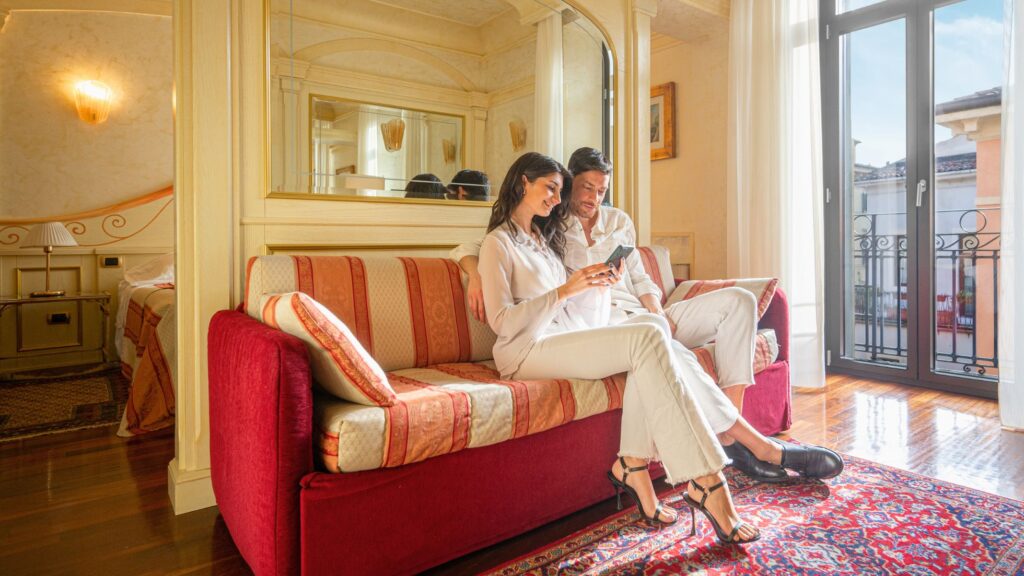
What to See in Verona: the Colomba d’Oro’s Complete Guide to Visiting the City
This guide from Colomba d’Oro compiles all the best things to see in and around Verona, offering a variety of ideas to organize your stay starting right from the closest four-star hotel to the Verona Arena.
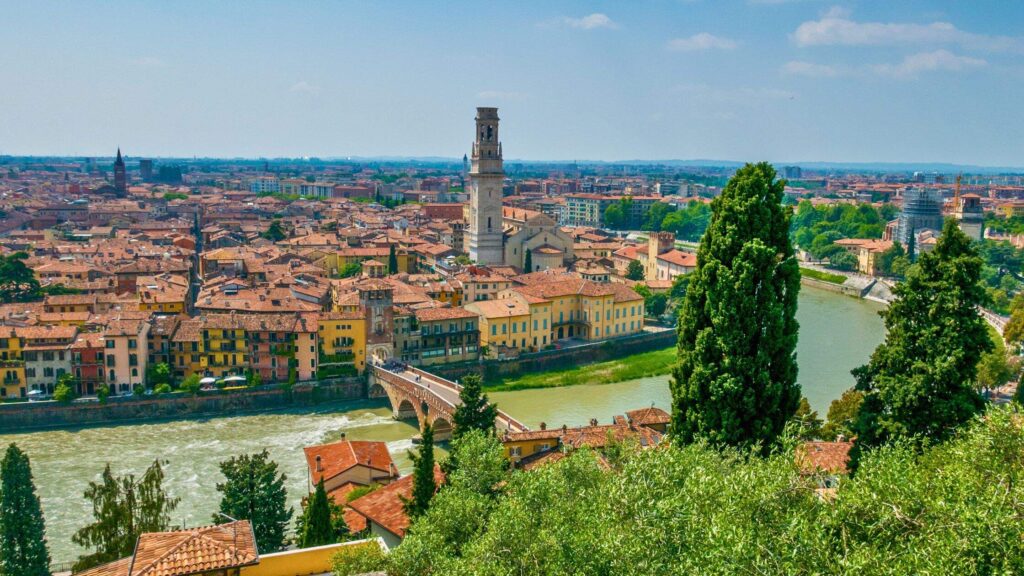
The Capitular Library, a treasure to discover near the Colomba d'Oro
Just steps from Hotel Colomba d'Oro, next to Verona's Duomo, stands the Biblioteca Capitolare: the world's oldest library still in continuous use, home to over 1,200 manuscripts and the Indovinello Veronese, among the earliest traces of the Italian language. Come discover it!
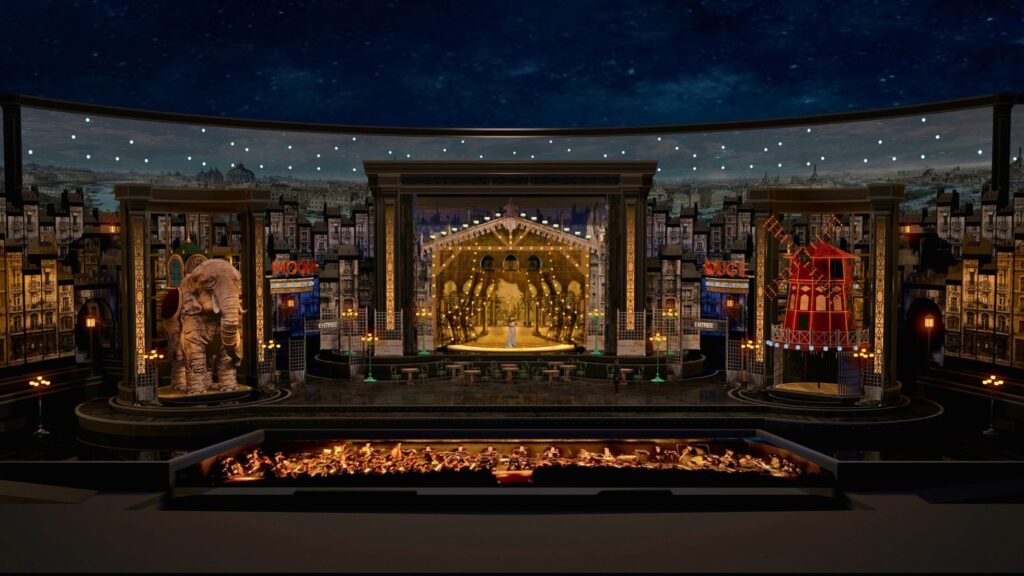
From Moulin Rouge to the Verona Arena: the nights of the new Traviata near the Colomba d'Oro
La Traviata hitting the stage at the Arena di Verona for the 2026–2027 season is designed to highlight the amphitheater's monumental scale, blending great Italian musical tradition with a scenic language that speaks even to first-time operagoers. We look forward to seeing you!
