
Roman Age Verona: an archaeological itinerary, just steps from the Colomba d’Oro
Despite over two thousand years having passed since its foundation, Verona still retains a profoundly Roman soul. It boasts the privilege of being second only to Rome itself in terms of the wealth of relics of the Roman Empire, and many traces of that era remain intact: some monumental and visible above ground, others fascinating and hidden beneath street level.
Staying in the four-star hotel in Verona’s historic center closest to the Arena is the best way to discover this heritage: a strategic hobe base for a walking itinerary, or with a bicycle rented at the hotel.
The Hotel Colomba d’Oro in the heart of Roman Verona
The Colomba d’Oro welcomes its guests in an elegant historic Renaissance building, perfectly integrated into the urban fabric of the city center. Its location, just steps from Piazza Bra, makes it an ideal starting point for exploring Verona, following the “cardo” and “decumanus” streets, through narrow streets that retain the imprint of the Imperial Age.
The Great Roman Monuments: the Verona Arena and the Gavi Arch
The Verona Arena represents one of the most extraordinary examples of Roman architecture in the world. Archaeologists date its construction between 30 and 42 AD, therefore at least 30 years before the Colosseum in Rome. Throughout its long history, it was the site of gladiators combat, as well as exotic animal hunts and, most likely, even Christian martyrs. With the rise of Christianity, it gradually lost its original function, undergoing phases of reuse and transformation.
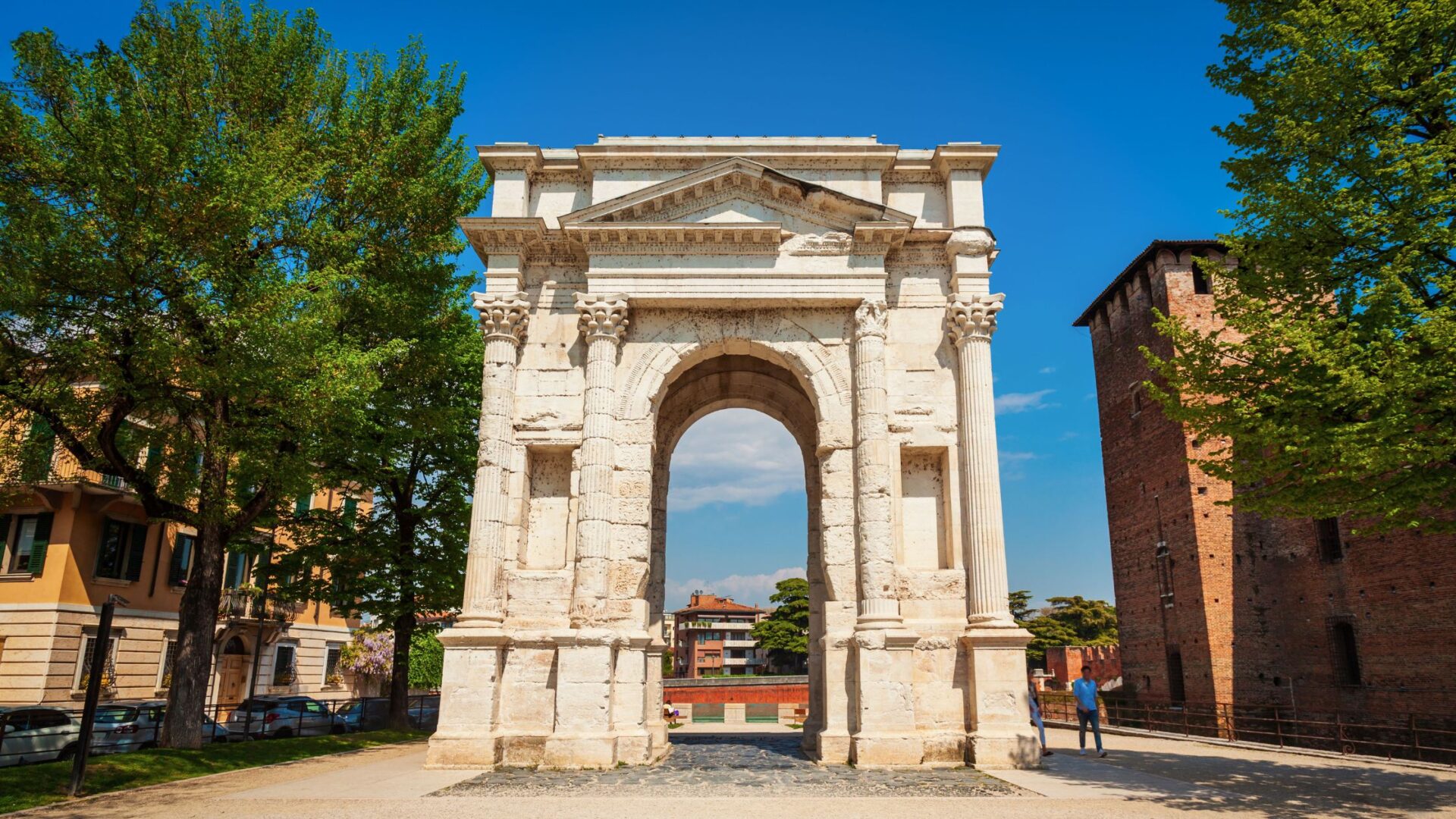
Today, the Arena is one of the city’s main symbols and an international reference point for opera. Its proximity to the Colomba d’Oro makes a stay here particularly evocative, especially during the opera season. A short distance from the hotel (about a 5-minute walk) is the Gavi Arch: built to celebrate a high-ranking local family, it stands out for its private function, an unusual element in Roman architecture. Originally located along one of the main access routes to the city, it still represents an elegant symbol of Verona during the Imperial Age.
The City Gates: Porta Borsari and Porta Leoni
Among the most fascinating remnants of Roman Verona are the ancient city gates, also just a few minutes’ walk from the Colomba d’Oro:
- Porta Borsari: one of the main entrances to the city, located along the Decumanus Maximus, today it presents a spectacular stone façade that leads to the area of the ancient forum, identifiable with the current Piazza delle Erbe;
- Porta Leoni, however, retains part of its original structure and clearly demonstrates the connection between the city walls and the Roman defense system. What we see today, walled into a 13th-century building, is a vertical half of the section facing the city, once 13 meters high and built of white stone.
Roman Bridges: Spanning Time on the Adige River
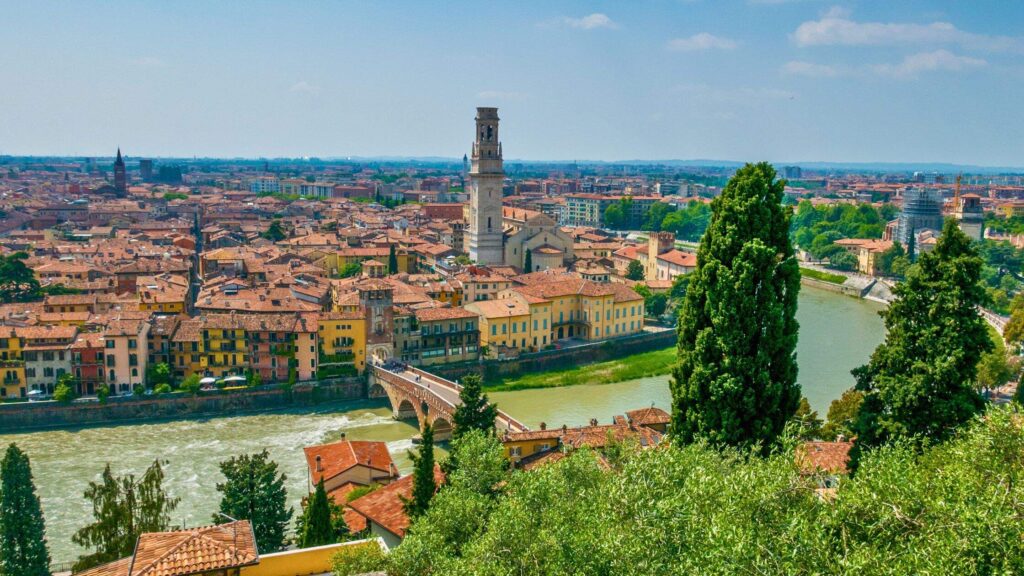
The Adige River has always played a central role in the development of the City of the Colomba d’Oro. Of the bridges that span it, Ponte Pietra is the only one of Roman origin that has survived to this day. Built in ancient times and rebuilt several times, it still retains its original function of connecting the two banks of the city.
Its location, near the Roman Theater, makes it an essential stop on any archaeological itinerary in Verona, easily accessible by bicycle from the historic center.
A tale of two theatres
In addition to the Verona Arena, Verona is also home to the Roman Theater, located at the foot of Colle San Pietro, overlooking the river. This is a semi-circular auditorium, whereas the Arena is an amphitheatre (in the round). Built in the 1st century BC, it is one of the best-preserved examples in northern Italy and testifies to the city’s cultural importance since Roman times. As an added extra here, overlooking the Roman Theater is the Archaeological Museum, containing many Roman artefacts including mosaics, bronzes, glass, ceramics, statues, and busts.
Such venues, originally created for public entertainment, continue to be cultural spaces, integral to the city’s contemporary life.
The Roman Forum: Piazza delle Erbe
The current Piazza delle Erbe (Verona’s market square) coincides with the ancient “forum,” the center of political, administrative, and commercial life in the Roman city. Today, it remains one of Verona’s liveliest spots, bustling with stalls, bars, and unique buildings; its urban layout retains the layout of the ancient Roman square. Just a few minutes’ walk from the Hotel Colomba d’Oro, it is a must-see on any stroll through Verona’s historic center.
Invisible Roman Verona: underground archaeology
Verona holds an archaeological heritage hidden beneath street level. Cellars, courtyards, and foundations reveal a surprising underground city, revealing the continuity of the urban settlement. Among the main sites of underground Roman Verona are:
- Corte Sgarzerie with the cryptoporticus linked to the Capitolium;
- the domus of Piazza Nogara;
- the Scavi Scaligeri, recently reopened to the public;
- the stratifications of Via San Cosimo;
- the Roman villa of Valdonega, just outside the city center, famous for its mosaics;
- the areas under continuous study near the Arena and Porta Borsari.
Many of these sites can be visited by reservation or during special openings. Book your room at the Colomba d’Oro now and receive our personalized tips upon arrival to discover the most fascinating corners of Roman Verona.
FAQ – Roman Verona and the Colomba d’Oro
Why choose the Colomba d’Oro to visit Roman Verona?
The central location of the Colomba d’Oro allows you to easily walk to all places of Roman interest: the Verona Arena, Piazza delle Erbe, the Roman gates, the bridges, and many archaeological sites.
Is it possible to visit underground Verona?
Yes, several sites are accessible via guided tours and organized itineraries. However, we recommend checking opening hours or hiring a licensed guide.
How much time is needed for an archaeological tour of Verona?
A first itinerary can be completed in one or two days. To delve deeper into underground archaeology, it is advisable to set aside more time.
Is the itinerary also suitable for first-time visitors to Verona?
Roman Verona offers an immediate and fascinating insight into the history and structure of the city.
Other Offers
The Capitular Library, a treasure to discover near the Colomba d'Oro
Just steps from Hotel Colomba d'Oro, next to Verona's Duomo, stands the Biblioteca Capitolare: the world's oldest library still in continuous use, home to over 1,200 manuscripts and the Indovinello Veronese, among the earliest traces of the Italian language. Come discover it!
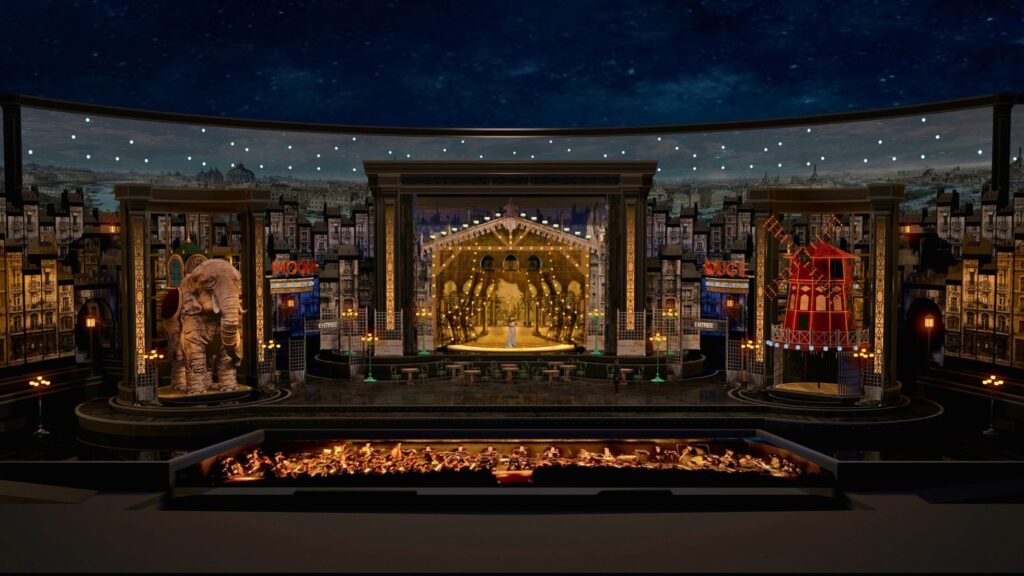
From Moulin Rouge to the Verona Arena: the nights of the new Traviata near the Colomba d'Oro
La Traviata hitting the stage at the Arena di Verona for the 2026–2027 season is designed to highlight the amphitheater's monumental scale, blending great Italian musical tradition with a scenic language that speaks even to first-time operagoers. We look forward to seeing you!
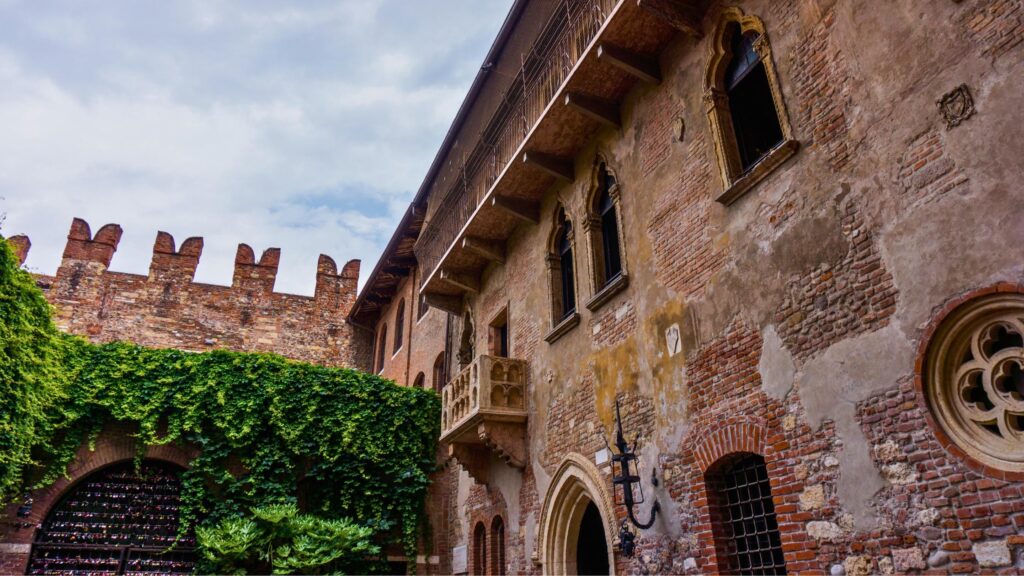
Sleeping near Juliet's House: Discover Verona from the Colomba d'Oro
Every year, thousands of tourists flock to the city of the Hotel Colomba d’Oro to experience the settings of Shakespeare’s tragedy firsthand, discovering whether it is merely a literary invention or if it holds a grain of truth. Located on Via Cappello, just a short stroll from the Hotel Colomba d’Oro, stands the most famous balcony in the world: Juliet’s balcony.
